The Believers –
Portraits of religiousness during the Ukraine war
The Believers –
Portraits of religiousness during the Ukraine war
Portraits of religiousness during the Ukraine war



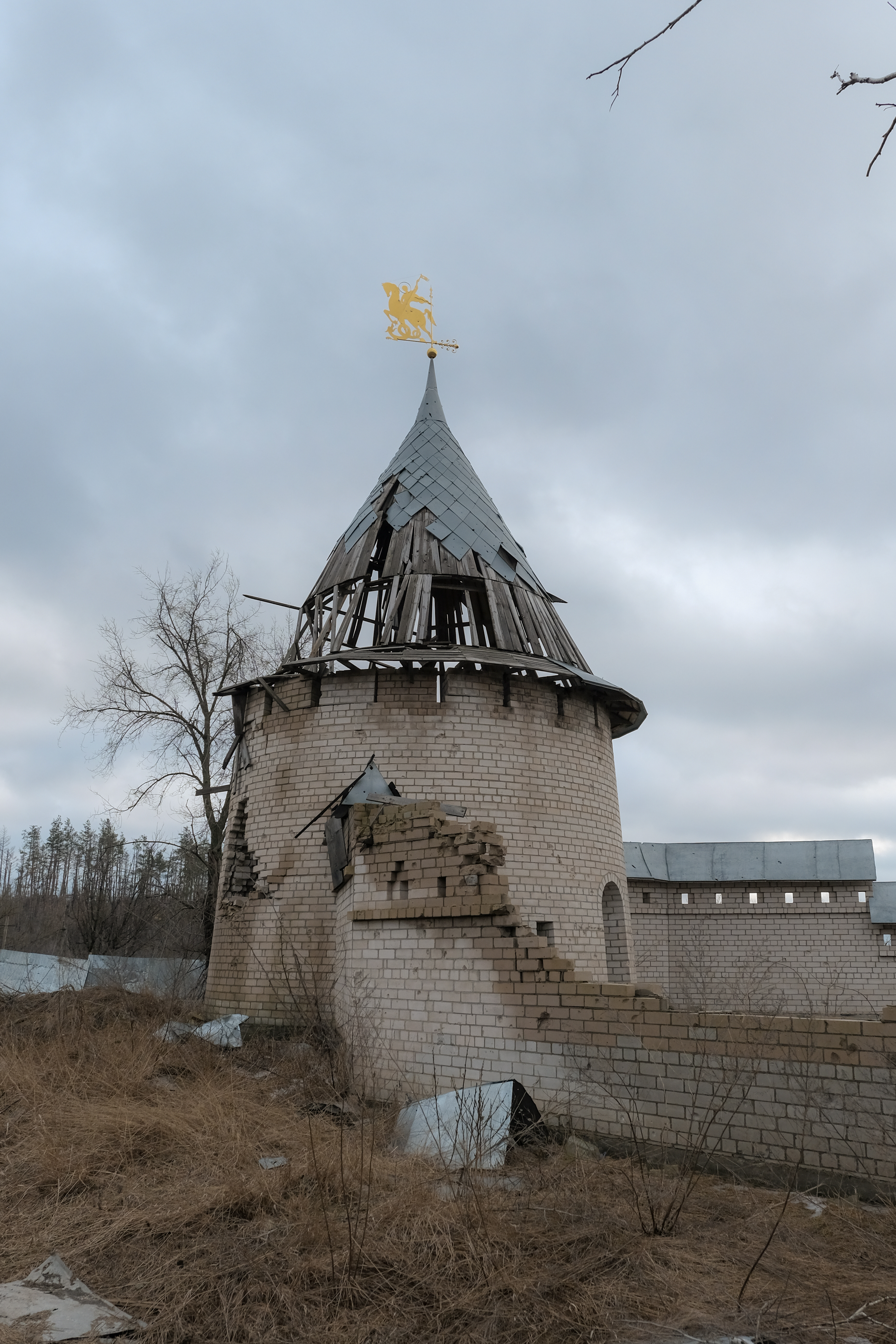
The Believers documents the rise of religousness during the war in Ukraine through personal portraits.
Shot in Kyiv and Donetsk shortly before the two year anniversary of the Russian invasion, this ongoing, personal project is still looking for a publication. Below is a short text about the encounters I made and why religion remains a key coping mechanism during armed conflicts:
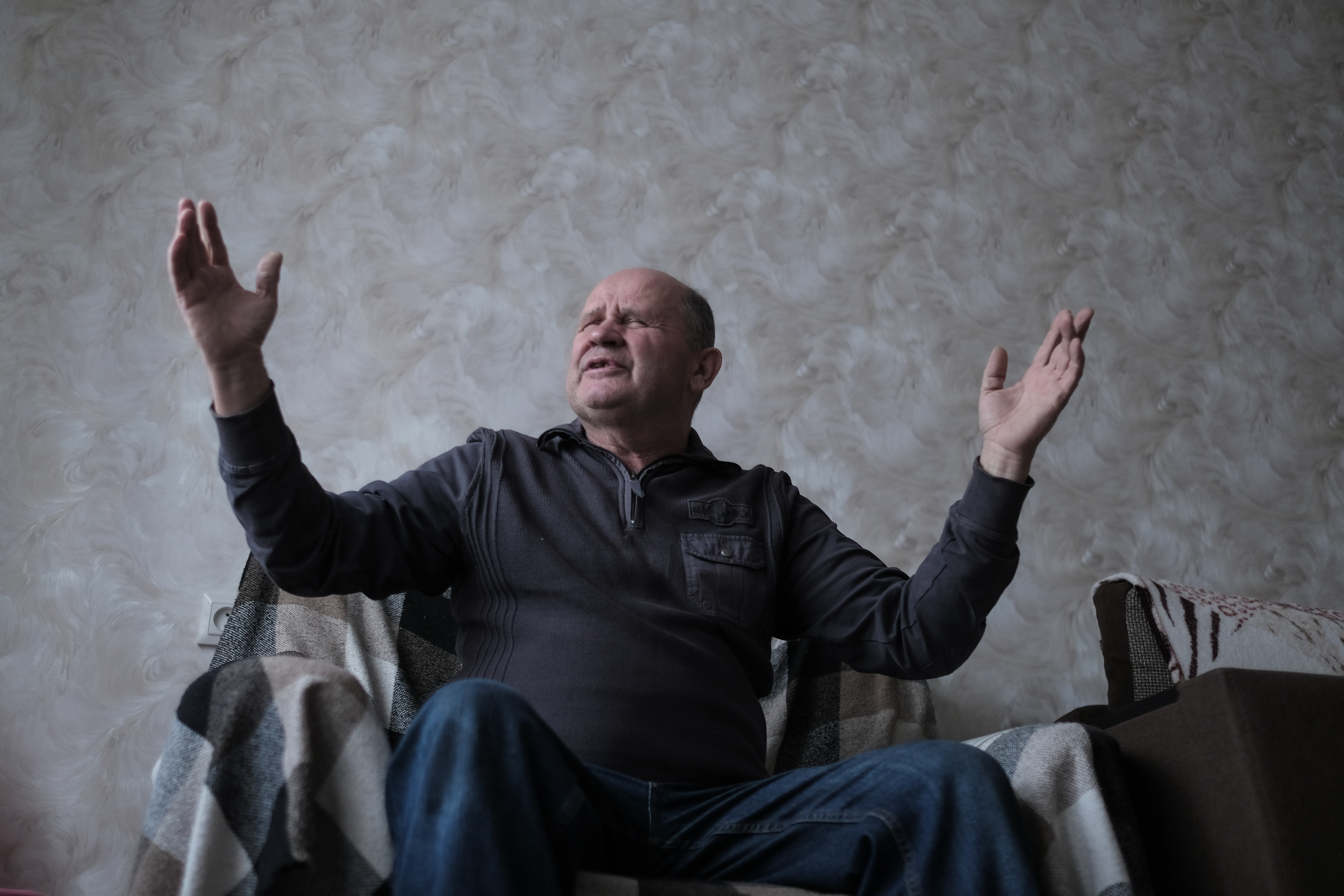
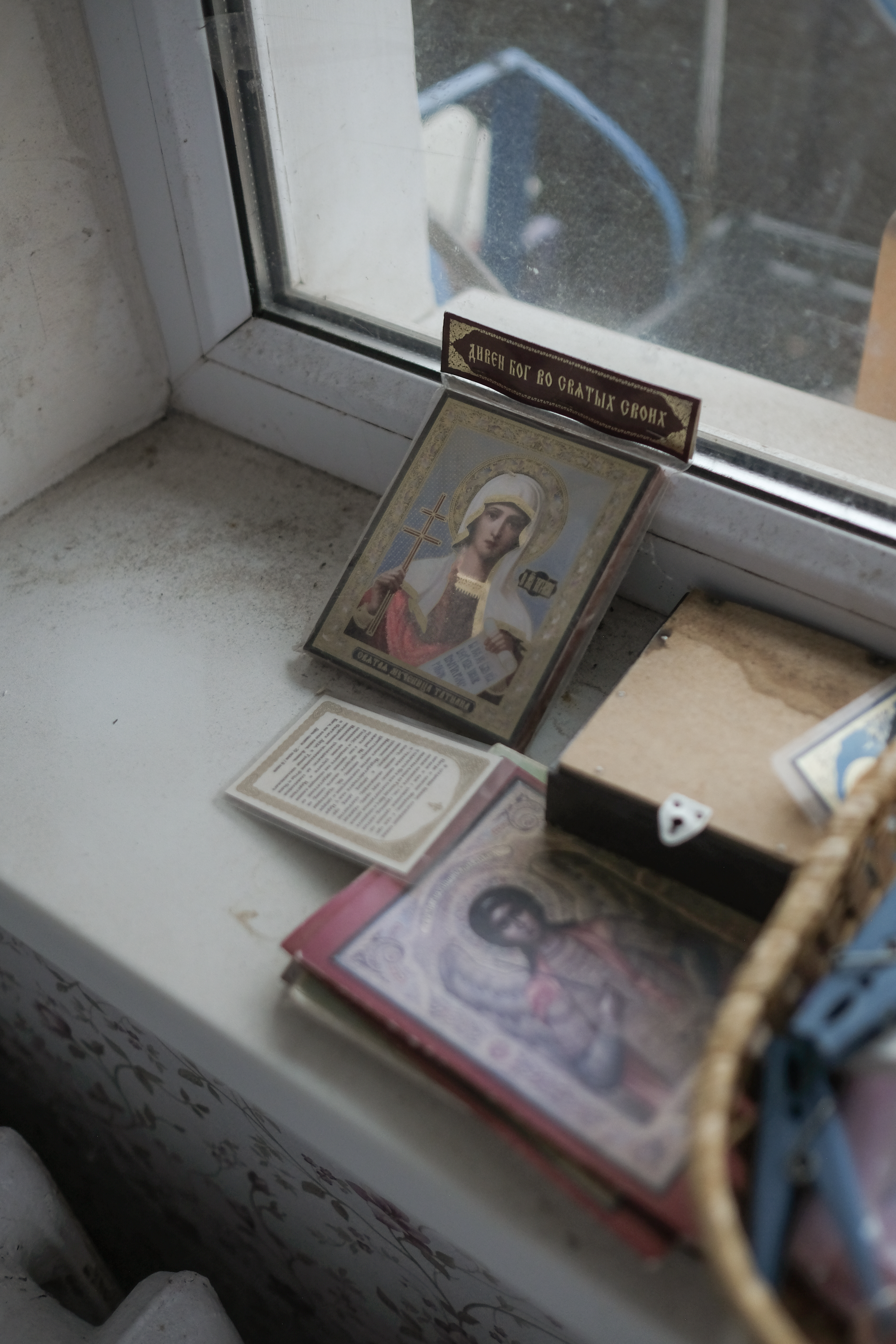
Letters and bills are pouring out of Juri’s mailbox. The refrigerator is wide open, and plastic toys and framed photos of his granddaughter are scattered around the apartment. Juri sits down on the sofa and sighs. Everything in his apartment is exactly as it was since the day he left, only dustier. It’s been almost two years since he escaped from the battles in his hometown of Slowjansk. His gaze wanders to the window, to the dreary scenery outside and the withered houseplants on the window stills. Then he closes his eyes tightly and begins to mumble, barely audible at first. He spreads his arms, gestures his hands towards the sky, his voice now clear and steadfast: Juri is praying.
Two anniversaries are approaching in January 2024: The occupation of Crimea by Russia on February 27, 2014, and the start of the Russian invasion on February 24, 2022. I travel to Kyiv and eastern Ukraine at the end of 2023 in search of people who have become displaced in their own country. I want to understand how Ukrainians cope with the struggles of everyday life away from the frontlines and the role religion plays for them. I met people from different walks of life who offered glimpses into their everyday lives and their personal stories of war and faith.
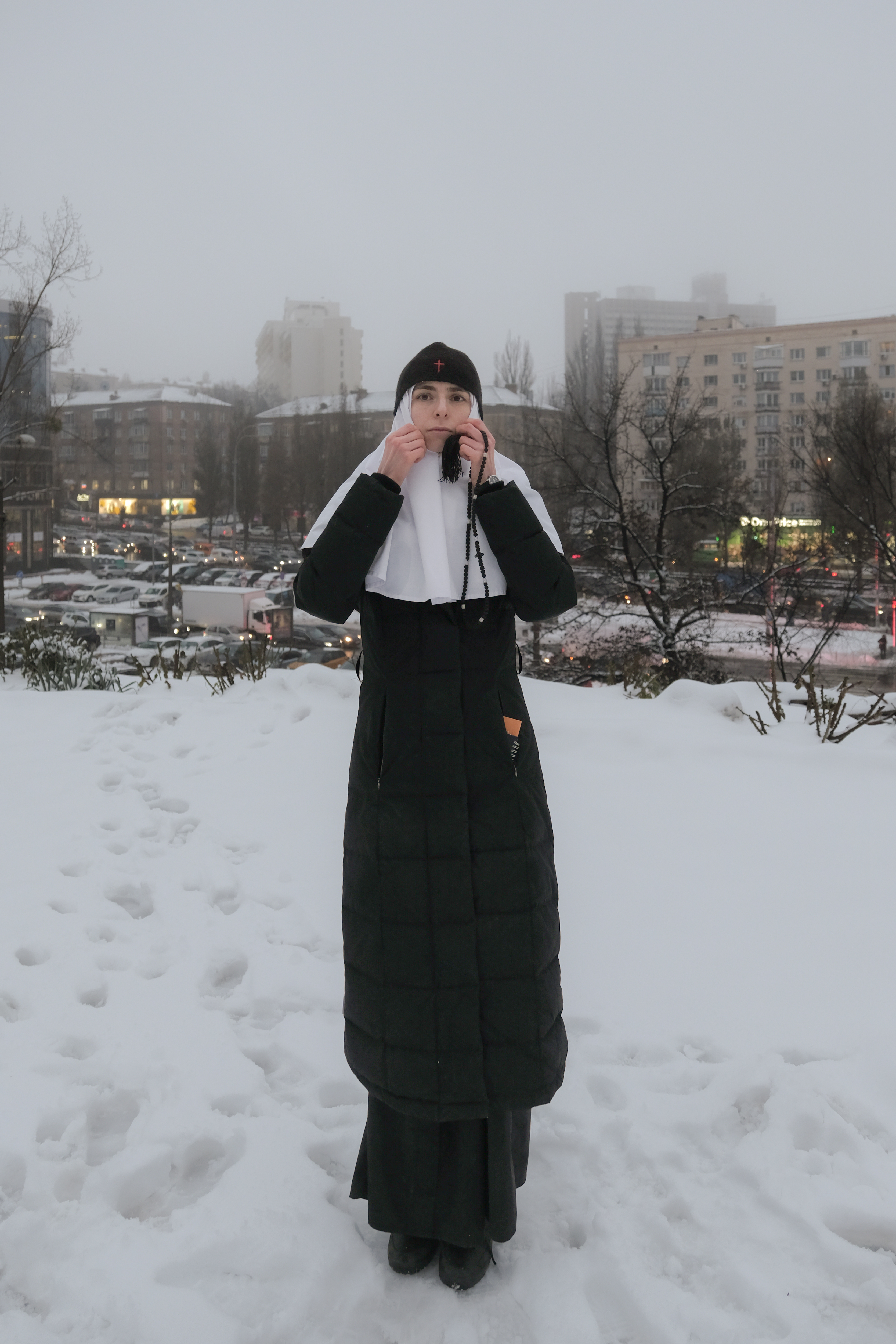
There is Sister Elisabeth, who fled Crimea with her mother in 2014. Back in Crimea, she worked as an economist, a life she had left behind alongside her old name. Now she dedicates her life to serving her monastery – and through it, god. I also met Nikita, a 30-year-old soldier who was part of a 360-strong brigade. Only three returned alive, he was one of them. He tells me that this war is an earthly battle between good and evil. To win this war, he claims, one must believe.
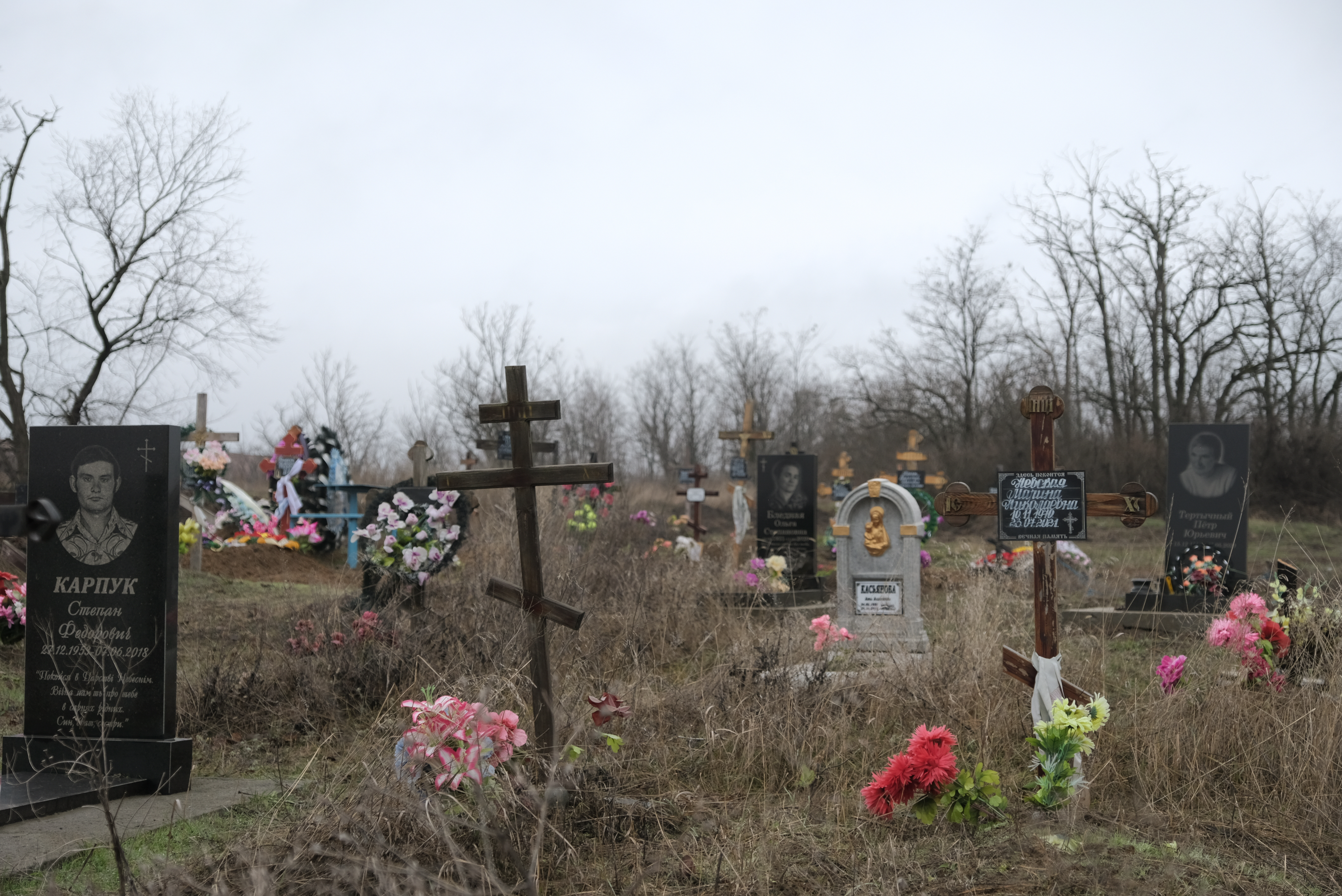
Many Ukrainians I spoke to, claim that christianity and religion itself has been instrumentalized by Putin and the Russian Orthodox church. The war has long transcended an armed conflict and entered the realm of religious warfare. UNESCO has documented 334 destroyed sites of cultural relevance since the beginning of the full-scale invasion in 2014. Almost half of these sites are churches. Religious rituals and beliefs increase during armed conflicts and war.
The evolutionary biologist Joseph Henrich describes this phenomenon as a “coping strategy for difficult, psychological states”. His research supports the hypothesis that war increases religiosity. The personal stories collected here serve as a portrait of religious shifts during the Ukraine war. A phenomenon often overlooked but hiding in plain sight. Juri is about the leave. Suddenly he pauses, rushes into the kitchen, and begins to fill two empty bottles with tap water. “I forgot to water my plants,” he says and runs back into the living room. I watch him from the hallway, as he pours in silent dedi- cation. Once he is done, he turns around and looks at me in defiance. “Don't worry, they are strong and they will make it” he proclaims, then he locks the door.
Shot in Kyiv and Donetsk shortly before the two year anniversary of the Russian invasion, this ongoing, personal project is still looking for a publication. Below is a short text about the encounters I made and why religion remains a key coping mechanism during armed conflicts:
Letters and bills are pouring out of Juri’s mailbox. The refrigerator is wide open, and plastic toys and framed photos of his granddaughter are scattered around the apartment. Juri sits down on the sofa and sighs. Everything in his apartment is exactly as it was since the day he left, only dustier. It’s been almost two years since he escaped from the battles in his hometown of Slowjansk. His gaze wanders to the window, to the dreary scenery outside and the withered houseplants on the window stills. Then he closes his eyes tightly and begins to mumble, barely audible at first. He spreads his arms, gestures his hands towards the sky, his voice now clear and steadfast: Juri is praying.
Two anniversaries are approaching in January 2024: The occupation of Crimea by Russia on February 27, 2014, and the start of the Russian invasion on February 24, 2022. I travel to Kyiv and eastern Ukraine at the end of 2023 in search of people who have become displaced in their own country. I want to understand how Ukrainians cope with the struggles of everyday life away from the frontlines and the role religion plays for them. I met people from different walks of life who offered glimpses into their everyday lives and their personal stories of war and faith.
There is Sister Elisabeth, who fled Crimea with her mother in 2014. Back in Crimea, she worked as an economist, a life she had left behind alongside her old name. Now she dedicates her life to serving her monastery – and through it, god. I also met Nikita, a 30-year-old soldier who was part of a 360-strong brigade. Only three returned alive, he was one of them. He tells me that this war is an earthly battle between good and evil. To win this war, he claims, one must believe.
Many Ukrainians I spoke to, claim that christianity and religion itself has been instrumentalized by Putin and the Russian Orthodox church. The war has long transcended an armed conflict and entered the realm of religious warfare. UNESCO has documented 334 destroyed sites of cultural relevance since the beginning of the full-scale invasion in 2014. Almost half of these sites are churches. Religious rituals and beliefs increase during armed conflicts and war.
The evolutionary biologist Joseph Henrich describes this phenomenon as a “coping strategy for difficult, psychological states”. His research supports the hypothesis that war increases religiosity. The personal stories collected here serve as a portrait of religious shifts during the Ukraine war. A phenomenon often overlooked but hiding in plain sight. Juri is about the leave. Suddenly he pauses, rushes into the kitchen, and begins to fill two empty bottles with tap water. “I forgot to water my plants,” he says and runs back into the living room. I watch him from the hallway, as he pours in silent dedi- cation. Once he is done, he turns around and looks at me in defiance. “Don't worry, they are strong and they will make it” he proclaims, then he locks the door.
All images copyright of Guannan Li